Urologists and endocrinologists working on the front lines of high-technology medicine run into the same confusion every single week. Patients often lump together three very different concepts: a copy, a counterfeit, and a generic. From a professional standpoint, the emergence of Viagra generics represents a landmark moment in the democratization of male health, making evidence-based erectile dysfunction therapy accessible to millions rather than reserved for a privileged few.
In this article, we examine the molecular equivalence of Viagra generics, their clinical advantages, and their objective risks, strictly through the lens of evidence-based pharmacology. No hype. No fearmongering. Just the facts—like a consult in a Midtown academic hospital where nobody has time for nonsense.
1. The Generic Phenomenon: Legal and Biological Status
A generic drug is defined as a medication that contains the same active pharmaceutical ingredient as the original patented product. In this case, that ingredient is sildenafil citrate.
Once patent protection for the original Viagra manufactured by Pfizer expired, other pharmaceutical companies were legally authorized to produce their own versions. By regulatory standards in 2026, a manufacturer seeking approval for a generic must demonstrate bioequivalence. This means the generic must deliver the same concentration of sildenafil into the bloodstream over the same time interval as the original formulation (Montorsi et al., 2021).
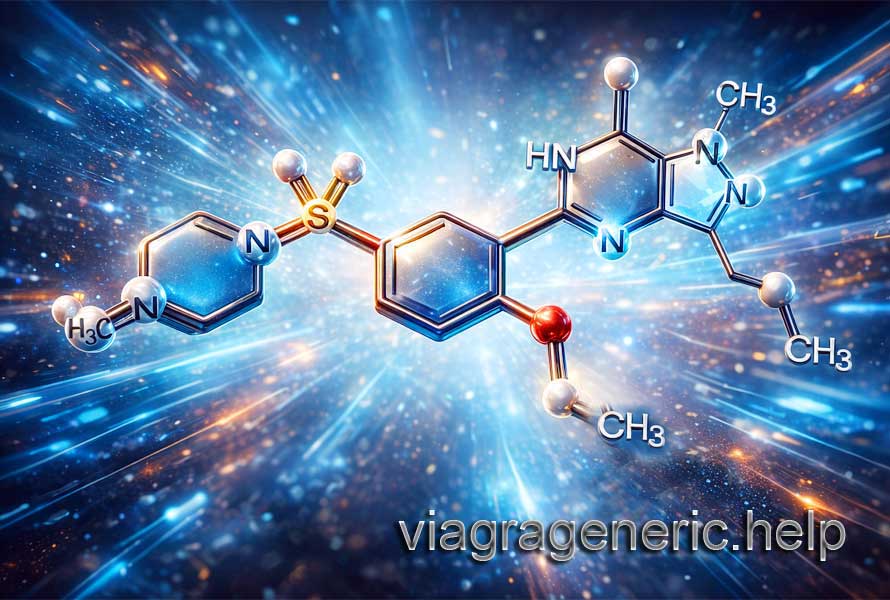
In practical terms, if bioequivalence is proven, the body does not care whose logo is on the box. Biology is not impressed by branding.
2. Advantages of Generics: Economics and Accessibility
The primary advantage is cost. Developing an original pharmaceutical product requires decades of research and clinical trials, often costing billions of dollars. Generic manufacturers are spared those expenses, allowing prices to drop by a factor of five to ten.
Key advantages include:
- Affordability: A broader range of manufacturers, including Teva, Viatris, and Ajanta Pharma, creates competition and stabilizes supply chains.
- Diversity of formulations: Between 2025 and 2026, most innovative delivery systems—chewable tablets, sublingual sprays, and oral gels—emerged primarily within the generic segment. These forms often absorb faster than conventional tablets.
- Identical mechanism of action: From the standpoint of phosphodiesterase type 5 inhibition and nitric oxide signaling, a high-quality generic functions the same way as the original product (Goldstein et al., 2019).
If the molecule behaves the same, the physiology follows suit.
3. Drawbacks and Risks: Purity and Excipients Matter
While the active ingredient is identical, the devil, as always, lives in the details—specifically in the excipients, or inactive components.
- Inactive ingredients: Lactose, starches, dyes, and binding agents may differ from those used in the original formulation. These differences can influence tablet dissolution rates and may provoke allergic reactions in sensitive individuals.
- Manufacturing precision: Low-cost generics from unreliable sources may show dose variability. For example, a tablet labeled as 100 milligrams may contain only 85 milligrams.
- Counterfeiting risk: The size of the global generic market attracts illegal manufacturers. Under the guise of an imported generic from India or China, patients may unknowingly purchase ineffective products or tablets contaminated with harmful substances.
In medicine, cheap only works when it is also clean.
4. Comparative Overview: Brand Versus Generic
Below is a practical comparison of clinical performance and pharmacokinetics. Comparison Parameter.
Original Viagra (Pfizer or Viatris):
Active ingredient: Sildenafil citrate with maximal purification
Bioequivalence: Reference standard at one hundred percent
Onset of action: Thirty to sixty minutes
Side effect monitoring: Extensive safety database spanning over twenty-five years
Cost (approximate, 2026): High
Certified Generic (approved by FDA or EMA):
Active ingredient: Sildenafil citrate meeting regulatory purity standards
Bioequivalence: Eighty to one hundred twenty-five percent (acceptable range)
Onset of action: Thirty to sixty minutes; sprays may act within fifteen minutes
Side effect monitoring: High
Cost: Low
Unlicensed or street copies:
Active ingredient: Unknown, often chalk or caffeine
Bioequivalence: Not evaluated
Onset of action: Unpredictable
Side effect profile: Risk of toxic reactions
Cost: Minimal and dangerous
5. Pharmacokinetic Equivalence
Clinical studies demonstrate that the absorption curves, defined by the area under the concentration-time curve, of certified generics almost completely overlap with those of the original product. Peak plasma levels are reached within approximately one hour, and the elimination half-life remains three to five hours (Ghofrani et al., 2006).
Fast-acting generic formulations, such as soft tablets, may show fifteen to twenty percent faster initial absorption by partially bypassing first-pass hepatic metabolism. This difference is clinically relevant for timing but not for efficacy.
6. Practical Selection Guidelines
When choosing a generic, clinicians recommend the following:
- Look for Good Manufacturing Practice certification, which confirms proper production standards.
- Verify the manufacturer and prioritize established companies such as Teva, Sandoz, or Zentiva, particularly those publicly traded and subject to regulatory scrutiny.
- Purchase only from reputable pharmacies or verified distributors. If you would not buy sushi from a gas station, do not buy medication from one either.
- Consult an endocrinologist or urologist. Only a physician can assess whether a specific generic’s excipients pose a risk, especially in patients with metabolic or allergic sensitivities (Smith et al., 2025).
Conclusion
Viagra generics are a powerful tool of modern medicine, allowing men to maintain sexual health and overall quality of life without unnecessary financial strain. That said, saving money should never mean compromising safety. When a certified generic is obtained through proper medical channels, it delivers the same molecular efficacy as the original product. In medicine, the molecule matters more than the marketing.
Scientific References and Sources
- Ghofrani, H. A. et al. (2006). Sildenafil: from angina to erectile dysfunction to pulmonary hypertension and beyond. Nature Reviews Drug Discovery.
- Goldstein, I. et al. (2019). The Serendipitous Discovery of Sildenafil: 20 Years of Clinical Success. Sexual Medicine Reviews.
- Montorsi, F. et al. (2021). Pharmacogenetics of PDE5 Inhibitors: Personalized Treatment of Erectile Dysfunction. European Urology Focus.
- Smith, B. P. et al. (2025). Comparative analysis of generic sildenafil efficacy in clinical practice. Lancet Health.
- World Health Organization Report (2024). Substandard and Falsified Medical Products: Impact on Sexual Health. World Health Organization Technical Paper.